
Picture your garage door as a train. The opener is the engine, the springs are the tracks, and the wheels doing the real work are the rollers. When the rollers are right, everything glides. When they are wrong, the whole system rattles. If quiet, smooth operation is the goal, upgrading to the best garage door rollers is the most direct move you can make. It is often the quickest path to a quieter home, a longer-lasting opener, and fewer repair headaches.
Many problems traced to “a tired opener” or “bad tracks” are actually caused by worn or low-grade rollers. Old plastic wheels grind and pop. Steel rollers can roar on metal tracks. Bearings collect dirt and seize. In each case, friction goes up, noise follows, and the opener works harder than it should. The fix is simple: match your door with rollers built for your door’s weight, your climate, and your daily use.
This guide walks through everything needed to pick the right rollers in 2025. You will learn how rollers work, what nylon vs. steel really means, how bearing count and sealing affect life span, and which models stood out in our expert testing. You will also get clear steps for sizing, signs that it is time to replace, real costs, and why professional installation often saves money in the long run.
Swift Garage Doors serves homeowners and businesses across the Greater Toronto Area (GTA) with licensed technicians available 24/7. Our team installs quiet, long lasting garage door rollers every day, including our own premium 13‑ball sealed nylon model. Read on to see how the right rollers lower noise, protect your opener, and keep your door running like new.
What Are Garage Door Rollers and Why Do They Matter?
Garage door rollers are the small wheels seated inside the side tracks. Each roller has a wheel and a steel stem that slides into the door hinges. As the door opens and closes, the rollers guide the panels, turning what would be heavy sliding friction into smooth rolling motion. That simple switch from sliding to rolling is why rollers matter so much.
A typical residential door weighs 150–400 pounds. Without good rollers, the door drags against the track and the opener must pull harder. That extra load strains the motor and gears, beats up hinges and cables, and can bend tracks. With the best garage door rollers, the door glides with less resistance. The opener coasts, the springs see even load, and every part lasts longer.
Rollers also control noise. Bare plastic wheels and worn steel bearings make grinding, squeaking, and rattling sounds. Sealed nylon rollers dampen vibration and glide quietly, which is a big deal for attached garages and bedrooms above the garage. Fewer vibrations also mean fewer loose fasteners and less stress across the door.
Think of rollers as small parts with big impact. Better rollers reduce friction, cut noise, and protect the rest of the system. That is why upgrading to quiet garage door rollers is one of the highest-value garage upgrades you can make. It often costs far less than a new opener while delivering daily comfort, smoother travel, and better safety.
Understanding Garage Door Roller Anatomy: Components That Define Performance
Every roller is built from three elements that decide how it behaves under load: the wheel, the stem, and the bearing system. The wheel’s material and diameter affect noise and smoothness. The stem’s length and finish affect fit and corrosion resistance. The bearings—if present—decide how freely the wheel spins and how long it lasts. Small choices here add up to big differences in everyday use.
Premium rollers combine a quiet, durable wheel (usually nylon) with a correctly sized stem and a sealed bearing pack. This trio gives the door a stable, quiet ride and keeps dirt and moisture away from the moving parts that do the real work. In our testing and field experience across the GTA, rollers that pair nylon wheels with sealed, precision bearings consistently run quieter, last longer, and need less ongoing care than basic plastic or unsealed steel options.
Knowing what these parts do makes shopping simple. Measure the wheel and stem to get a proper fit. Match bearing count and sealing to your door’s weight and your climate. Choose materials that suit your noise and longevity goals. With that, you can spot real quality and avoid “bargain” parts that cost more over time.
“Quiet doors don’t happen by accident. They start with the right rollers, set up correctly, and supported by clean tracks and good balance.” — Swift Garage Doors Technician
The Wheel: Material Matters
The wheel sits inside the track and sets the tone for noise and vibration. Plastic, steel, and nylon are common. Plastic is cheap but loud and short-lived. Steel is strong but transfers vibration and runs loud on steel tracks. Nylon is the sweet spot for residential use because it rolls smooth and dampens sound.
Most residential doors use 2-inch rollers (the actual wheel measures around 1.75–1.8 inches to fit a 2-inch track). Some commercial doors use 3-inch rollers for wider, heavier tracks. Always match wheel diameter to track size; too small feels loose and unstable, too large will not fit.
For Canadian weather, nylon is a standout. It stays stable in the cold, shrugs off humidity, and does not rust. Paired with a sealed bearing, nylon wheels deliver the quietest garage door rollers most homeowners will ever need.
The Stem: Length, Diameter, and Strength
The stem slides into the hinge and carries the wheel. Most residential stems are 7/16‑inch in diameter for a snug, stable fit. The two common lengths are about 4 inches for single-hinge setups and about 7 inches for double-hinge or low-headroom tracks that need extra reach.
Using the wrong stem length creates real problems. Too short and the roller can pop out under load. Too long and it can interfere with hardware or walls. Measure your existing stems from wheel base to tip and match that length. For longevity in the GTA, zinc-plated or galvanized stems fight corrosion from winter moisture and road salt.
Steel is standard for stems and works well. The key is correct length and good plating, not exotic metals. Get the length right and the rest of the system can do its job safely.
The Bearing System: The Heart of Roller Performance

Bearings are the difference between dragging and gliding. Bearing-less plastic wheels spin directly on the stem, which creates heat, noise, and fast wear. Ball bearings add tiny hardened steel balls in a race between the wheel and stem. They roll instead of slide, so friction plummets and smoothness jumps.
Bearing count matters because more balls spread the door’s weight across more contact points. Seven-ball designs are fine for light doors. Ten or eleven is the sweet spot for most residential doors. Twelve or thirteen offers extra stability and life on heavier insulated or wood doors. That said, sealing and precision matter more than raw count. A sealed 10-ball roller often outlasts an unsealed 13-ball design in our climate.
Open bearings need regular lubrication and are vulnerable to dust, moisture, and salt. Sealed bearings protect the race and factory grease from dirt and water. That “sealed” feature is a game changer in the GTA. It cuts maintenance and extends life dramatically, which is why sealed, precision bearings are our default recommendation for long lasting garage door rollers.
Garage Door Roller Materials: A Complete Comparison Guide
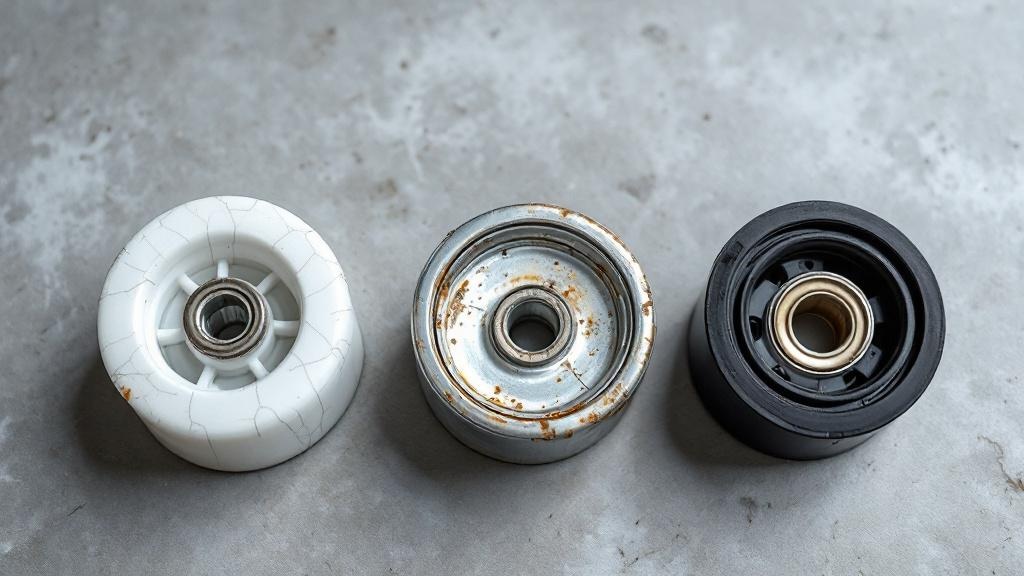
Material choice shapes noise, durability, maintenance, and cost. Plastic is budget-friendly but short-lived and loud. Steel is strong but louder and needs attention to fight rust. Nylon with sealed bearings delivers quiet operation and excellent life with little upkeep. Here is how each category behaves day to day in Canadian weather, along with where they make sense.
Plastic or basic nylon (no bearings) shows up on many builder-grade installations. They get a door moving for a few years, then noise climbs and cracks appear. Steel brings strength and stability, which can be helpful for very heavy or older wooden doors, but the noise trade-off is real, especially on attached garages. Sealed nylon pairs quiet performance with long life, which is why it has become the premium standard for homes.
Climate matters too. Road salt, humidity, and freezing temperatures are tough on open bearings and bare metal. Sealed bearings and corrosion-resistant stems handle those daily conditions far better, especially in the GTA’s winter-spring cycles. The right match for materials reduces service calls and keeps your opener running easier for years.
Here is a quick, at-a-glance comparison to help you choose:
| Roller Type | Noise Level | Maintenance | Typical Lifespan | Best Use Case |
|---|---|---|---|---|
| Plastic/Basic Nylon (No Bearings) | High | Low initially, increases quickly | 2–3 years | Light single-car doors, very short-term fixes |
| Steel With Ball Bearings | Medium–High | Regular lubrication required | 5–7+ years | Very heavy residential or commercial doors |
| Nylon With Sealed Bearings | Low | Minimal | 15–20+ years | Most residential doors seeking quiet operation |
Plastic/Basic Nylon Rollers (No Ball Bearings)
Builder-grade plastic or basic nylon rollers have a solid wheel spinning on the stem with no internal bearings. They cost very little and get installed by default on many new doors. The trade-offs show up fast. Friction is high, so they are noisy from day one and get louder as they wear. In cold weather, plastic becomes brittle and can chip or crack under load. Most sets last only 2–3 years in normal use before noise and flat spots push replacement. They can make sense for the lightest single-car doors in a pinch, but they are a false economy for anyone aiming for quiet, reliable operation.
Steel Rollers with Ball Bearings
Steel rollers pair a metal wheel with ball bearings, often ten or eleven. Strength is the selling point. They carry heavy doors and resist deformation. The downside is noise because the steel wheel rides on a steel track. Without careful, regular lubrication, they can squeal and grind. In the GTA, winter moisture and road salt accelerate rust on unsealed bearings and stems. With steady care, a good steel roller can run 5–7 years in residential use and longer in commercial settings where volume matters more than sound. They are a smart choice for very heavy doors when brute strength is the top priority and noise is secondary.
Nylon Rollers with Sealed Ball Bearings (The Premium Standard)
Nylon rollers with sealed, precision bearings combine low vibration with smooth, low-friction movement. The nylon wheel dampens sound, while sealed bearings protect the moving parts from dust, moisture, and salt. In real-world use, homeowners can expect up to a 75% drop in operating noise compared with plastic or old steel rollers. Premium models are rated for 50,000–100,000+ cycles, which translates to 15–20+ years for most families. They are virtually maintenance-free, handle Canadian winters well, and keep opener strain low. While they cost more up front, they often deliver the lowest cost per year of service. Swift Garage Doors recommends sealed nylon for almost all residential installations in the GTA.
How Many Ball Bearings Do You Really Need? The Numbers Explained
Bearing count reflects how the load spreads inside the roller. More balls share the door’s weight across more contact points, which reduces wear and improves stability. That is why a 13-ball roller on a heavy insulated door will feel calmer and smoother along the track than a 7-ball roller.
That said, count is not everything. Sealed, precision bearings bring more value than simply adding more balls to an open, unsealed design. In our testing, a sealed 10- or 11-ball nylon roller outperformed open 13-ball designs over time in the GTA because salt, moisture, and dust do not get inside the sealed race.
Here is the practical breakdown. Seven-ball designs are a basic upgrade for light, single-layer steel doors that do not see high daily use. Ten or eleven balls are the “quality standard” for most insulated two-car doors. Twelve or thirteen is the premium choice for heavy or high-usage doors, wood carriage doors, and doors with frequent daily cycles. For commercial doors, bearing count is only one piece of the puzzle—bearing quality, sealing, and load ratings matter more.
“If you’re choosing between more bearings or better sealing, pick sealing first for GTA homes,” notes a Swift Garage Doors service lead.
The sweet spot for most homeowners is a sealed 10- or 11-ball nylon roller. If your door is heavier or your family cycles it many times per day, step up to a sealed 13-ball roller for added stability and longevity.
Open Bearings vs. Sealed Bearings: Why the Seal Makes All the Difference
Open bearings are exposed to dust, debris, and moisture. That exposure means they need routine cleaning and lubrication to keep spinning freely. Miss a service window and grit turns the bearing into a grinder. In winter, moisture can freeze and pit the race. In summer, dusty air loads the bearing with grit. Both shorten life and raise noise.
Sealed bearings are different. A shield keeps dirt and water out and holds factory grease inside the race. There is no frequent relubrication. That protects the most delicate moving parts—the balls and races—through all four seasons. In the GTA, this sealed design pays back quickly. Salt spray from winter roads builds on hardware and tracks. Sealed bearings shrug it off, while open bearings start squealing unless they are cleaned and lubed on schedule.
The long-term math is simple. Sealed bearings cost more up front but last much longer and need less attention. Open bearings can work for certain heavy-duty commercial doors that receive frequent service and where noise is not a concern. For homeowners who want quiet, hands-off operation and the quietest garage door rollers possible, sealed bearings are the smart pick.
When to Replace Your Garage Door Rollers: 8 Warning Signs
Rollers wear with every cycle. Catching wear early protects your opener, tracks, cables, and springs. A quick monthly look and listen is enough to spot trouble before it grows.
- Excessive noise during operation tells a story. Grinding or scraping points to metal-on-metal contact or flat-spotted wheels. Screeching hints at failing bearings or a lack of lubrication on open-bearing rollers. Rattles suggest wobble in the wheel or a loose hinge fastener.
- Visible cracks, chips, or obvious deformation are hard fails. Plastic becomes brittle in cold weather and can fracture. Nylon can wear if the bearing fails. Steel can pit or warp if rust sets in. Any damage at the wheel edge is a cue to replace.
- Jerky, shaking, or unsteady movement means the rollers are not guiding the door smoothly. That uneven motion adds shock to the opener and can distort tracks.
- If the door hesitates, sticks, or needs more force than usual, friction is up. Worn rollers are often the cause, especially when the rest of the system is in good shape.
- Rust or corrosion on steel wheels or stems increases friction and weakens parts. Rust on open bearings can lead to seizure.
- Excessive wobbling when you gently wiggle a roller shows bearing wear. A little play is normal; a lot is not.
- Age is a factor. Plastic: 2–3 years. Standard steel: 5–7 years. Basic nylon: around 10 years. Premium sealed nylon: 15–20+ years. If your rollers are older than their typical range, plan a proactive swap.
- If the door has come off track or looks like it might, stop using it and call a professional. A seized or broken roller is a common cause and the system needs a safe reset.
“Noise is the first warning and wobble is the second. Don’t wait for a roller to fail before you act.” — Swift Garage Doors
Swift Garage Doors offers inspections across the GTA that spot these warning signs early. That visit can turn a small roller upgrade into a smoother, safer door with less stress on every other part.
How to Choose the Right Garage Door Rollers for Your Specific Needs
Picking the right rollers is a matching game. Measure first, then match weight, usage, and climate. The right fit is simple once the basics are clear.
- Step 1 is measuring your existing rollers. Measure wheel diameter (most residential wheels are about 1.75–1.8 inches for a 2-inch track). Measure stem length from the base of the wheel to the tip (about 4 inches for standard hinges or about 7 inches for double-hinge or low-headroom systems).
- Step 2 is confirming stem length for your hinge style. If you see double-end hinges or a low-headroom double-track setup, you likely need the longer stem.
- Step 3 is assessing door weight. Lightweight single-layer steel doors can use 7- or 10-ball sealed nylon rollers. Insulated steel, wood, or carriage doors do better with 12- or 13-ball sealed nylon or heavy-duty steel when sound is not the top concern.
- Step 4 is matching usage. If your family cycles the door 10–15 times per day, buy a high cycle-rated roller (75,000–100,000+ cycles). For light use, a 50,000-cycle model works well.
- Step 5 is considering GTA climate factors. Salt, humidity, and freeze-thaw cycles punish open bearings and bare steel. Sealed bearings and zinc-plated stems handle those conditions better.
- Step 6 is balancing budget and long-term value. Plastic is cheap but short-lived and loud. Steel is strong but needs frequent care and runs loud. Premium sealed nylon costs more up front but usually wins on cost per year and daily comfort.
When in doubt, Swift Garage Doors can size your door, recommend the best garage door rollers for your setup, and install them safely the same day.
Top 10 Best Garage Door Rollers in 2025: Expert-Tested Rankings
Our rankings combine field experience across thousands of GTA service calls with hands-on testing for noise, smoothness, build quality, bearing sealing, cycle ratings, and climate resistance. We focus on real-world results: quieter homes, fewer callbacks, and better opener life. Sealed nylon led the way for residential use, while heavy-duty steel still has a place for extreme loads.
#1. Swift Garage Doors Premium 13-Ball Sealed Nylon Rollers
Our top pick pairs a 2-inch nylon wheel with precision 13-ball sealed bearings and zinc-plated 7/16-inch stems in 4-inch and 7-inch lengths. In testing, these rollers cut noise dramatically, with a calm, whisper-like glide even on insulated double doors. The sealed race keeps out dust, moisture, and salt, which is perfect for GTA winters. Rated for 100,000+ cycles, they are built for homes that use the garage as the main entry.
Pros. Industry-leading quiet operation with excellent vibration damping. Precision sealed bearings that run smooth for years without extra care. Climate-optimised design that stands up to road salt and freeze-thaw cycles.
Cons. Higher initial cost than entry-level rollers, though the cost per year is lower over time.
Best For. Homeowners who want the quietest garage door rollers and long-term reliability on standard or heavy doors.
Swift Advantage. Available directly from Swift Garage Doors with professional installation, full-system tune-up, and a comprehensive parts and labour warranty for peace of mind.
#2. Ideal Door 2″ Nylon Roller with 13 Bearings
This 13-ball nylon roller is a strong market choice for heavy residential doors. The sealed bearing design lowers maintenance needs, and the nylon wheel rides softly on steel tracks to reduce household noise. Cycle ratings commonly range from 50,000 to 75,000, giving solid life for frequent daily use.
Pros. Quiet performance with higher bearing count for stability under load. Durable construction that handles insulated doors well. Widely available through retail and trade channels.
Cons. Some packages offer limited stem length options, which may require careful sizing. DIY buyers still need installation knowledge to avoid safety risks.
Best For. Heavy residential doors, particularly insulated two-car setups where a premium sealed design makes a clear difference. Swift Garage Doors can supply, size, and install these when requested and include a full alignment check.
#3. Chamberlain 2″ Quiet Nylon Garage Door Roller
Chamberlain’s quiet nylon roller uses a sealed 10-ball bearing configuration aimed at the residential market. The feel is smooth and the sound profile is far softer than plastic or open steel designs. Homeowners often choose these when they are already using Chamberlain openers.
Pros. Reliable brand with consistent quality control. Noticeable noise reduction compared with builder-grade parts. Easy to source at major retailers.
Cons. A mid-range bearing count can limit stability on very heavy doors. Retail pricing can sit above similar alternatives with comparable specs.
Best For. Standard insulated steel doors and homeowners who prefer sticking with a matching brand. Swift Garage Doors can source and install these as part of a tune-up if you prefer a Chamberlain-branded part.
#4. Clopay 2″ Nylon Roller with 11 Ball Bearings
Clopay’s 11-ball sealed nylon roller is a dependable OEM option with good noise control and smooth travel. It integrates well with Clopay door systems and keeps daily maintenance low thanks to its sealed bearing pack.
Pros. Tight manufacturing standards with OEM compatibility for Clopay doors. Balanced performance across noise, smoothness, and durability.
Cons. Access is often through the Clopay dealer network, which can limit quick pickup for DIY. Price sits in the mid-premium range.
Best For. Clopay door owners who prefer OEM components and consistent fit and finish. Swift Garage Doors installs and supports these rollers for Clopay systems across the GTA.
#5. Dura-Lift 2″ Ultra-Quiet Nylon Rollers
Dura-Lift targets value-conscious shoppers with sealed 10-ball nylon rollers at a friendly price. In testing, they delivered strong noise reduction and smoother door travel than unsealed options, making them a smart step up from plastic.
Pros. Excellent price-to-performance ratio with genuine quiet operation. Sealed bearings reduce maintenance and handle dusty garages better.
Cons. Cycle ratings are slightly lower than top-tier models, so very high-usage homes may want a 13-ball option. Stock can vary by region.
Best For. Budget-focused upgrades on standard doors and rental properties where quietness and basic longevity matter. Swift Garage Doors can install these for clients seeking a good-value quiet upgrade.
#6. Precision 2″ Heavy-Duty Steel Roller with 11 Bearings
This heavy-gauge steel roller is built for strength with an 11-ball bearing assembly. It carries heavy doors well and tolerates misalignment better than softer wheels. With regular lubrication, it will run for years.
Pros. High load capacity and commercial-grade durability when strength is the priority. Long life when maintained on schedule.
Cons. Noticeably louder than nylon on residential tracks. Requires ongoing lubrication, and in GTA winters, rust is a constant concern.
Best For. Extremely heavy wood doors, older warped doors, or commercial doors where noise is less important than brute strength. Swift Garage Doors services and maintains these with the correct lube schedule for Canadian weather.
#7. Amarr 13-Ball Quiet Roller
Amarr’s premium 13-ball sealed nylon roller focuses on quiet operation and smooth travel. The sealed design stands up to moisture, and the higher bearing count helps on heavier residential doors.
Pros. High bearing count with confident, low-vibration performance. OEM-level reliability from a major door brand.
Cons. Higher price tier and often sold through dealer channels, which can limit DIY availability.
Best For. Amarr door owners and premium residential installs where quietness is a must. Swift Garage Doors can source and install these and include a full door balance check.
#8. LiftMaster Quiet Nylon Roller
LiftMaster’s entry-level nylon roller typically comes with 7–10 bearings. It is a noticeable upgrade from plastic and a decent fit for lighter doors where budget matters.
Pros. Affordable and widely available with brand familiarity. Good step up in noise reduction compared to plastic.
Cons. Lower bearing count reduces stability and longevity on heavy or high-use doors. Not the best match for large insulated doors.
Best For. Light single-layer doors and budget upgrades. Swift Garage Doors can install these for value-minded clients and advise if a higher-cycle option would better suit your daily use.
#9. Raynor R200 Professional Grade Nylon Roller
Raynor’s professional-grade nylon roller targets high-use environments. It is often paired with commercial doors where silence matters more than steel-level strength.
Pros. Strong cycle ratings for higher usage and consistent sealed-bearing performance. Professional-grade build quality.
Cons. Overbuilt for many residential doors, which adds cost without meaningful benefit. Usually distributed through pro channels.
Best For. Apartment parkades, multi-unit buildings, or homes with very high daily cycles. Swift Garage Doors recommends this level when residential usage mirrors commercial patterns.
#10. EZ-Set Steel Ball Bearing Roller
This is a budget steel roller with unsealed bearings. It is stronger than plastic, but noise and maintenance are the trade-offs. With steady lubrication, it will carry a door reliably for a few years.
Pros. Very affordable with better strength than plastic wheels. Readily available for quick fixes.
Cons. Loud on steel tracks, needs frequent lubrication, and is vulnerable to rust in Canadian winters. Shorter life than sealed designs.
Best For. Emergency temporary repairs and low-investment properties. Swift Garage Doors can install these in a pinch but will recommend a sealed nylon upgrade for long-term comfort and value.
Residential vs. Commercial Garage Door Rollers: Understanding the Critical Differences
Residential doors usually ride on 2-inch rollers in 2-inch tracks and weigh hundreds of pounds, not thousands. Commercial doors often use 3-inch rollers and far larger tracks to carry heavy sectional or rolling doors under intense daily cycles. That size jump comes with distinct stem lengths, thicker stems, and heavier-duty bearings.
Load capacity is the next divider. Residential rollers are built for 75–150 pounds per roller. Commercial rollers go much higher because the doors they carry can weigh a lot more. Cycle ratings also change. A family might use 1,500–2,500 cycles per year. A dock door can see that much in a week. Industrial rollers are rated to survive that pace, often 100,000–500,000 cycles.
Materials follow the use case. Nylon dominates homes due to quiet performance. Steel leads in commercial spaces because it is rigid and does not deform under massive continuous loads, even though it runs louder. In wet or chemical-heavy environments like car washes, stainless options help fight corrosion.
Property managers, developers, and maintenance teams should always choose commercial-grade components for commercial doors. Swift Garage Doors specifies roller size, stem dimensions, and bearing systems that match the exact door, then supports them with maintenance programs that keep high-use entrances moving safely.
- Residential highlights: 2-inch tracks, quieter operation, comfort-focused.
- Commercial highlights: 3-inch tracks, high load capacity, maintenance-focused.
Climate Considerations: Choosing Rollers for Greater Toronto Area Weather

Winter in the GTA brings cold snaps, slush, and road salt. Summer brings humidity and dust. Both seasons punish open bearings and bare steel. That is why sealed bearings and corrosion-resistant stems belong at the top of your list.
Cold temperatures thicken lubricants and make plastics brittle. Moisture from melting snow creeps into open bearings and then freezes, creating roughness and early failure. Road salt accelerates rust on wheels, stems, and bearings. In summer, humid air feeds corrosion and dry dust loads open bearings with grit.
Sealed nylon rollers sidestep most of this. The nylon wheel will not rust, and the sealed race keeps factory grease clean and locked in. Zinc-plated stems fight winter corrosion. For very heavy doors that must use steel wheels, a strict maintenance plan with the right garage-door-safe lubricant is important.
Temperature swings from -30°C to +35°C are normal here. Choose rollers rated for those extremes. Swift Garage Doors recommends sealed nylon for residential homes in Toronto, Mississauga, and surrounding areas because they stay quiet and steady year-round with minimal upkeep.
Professional Installation vs. DIY Roller Replacement: A Safety-First Analysis

Swapping mid and upper rollers looks simple. But one part of the job is not simple at all: the bottom roller. That bracket ties into the lift cable, which is under spring tension. Removing it without releasing spring force correctly is dangerous.
DIY-minded homeowners can replace upper and middle rollers on a fully closed door if they are comfortable with tools and careful safety steps. It involves loosening hinge bolts, bending a small section of the vertical track slightly, swapping the roller, and bending the track back. It also involves disengaging the opener and securing the door so it cannot move.
Where DIY stops is the bottom bracket. That hardware is tied to the springs that lift the door. Attempting to remove it without the right tools and training can release stored energy suddenly. Injuries happen fast at that point. This step belongs to a trained professional.
“Bottom brackets are under spring tension. If you aren’t trained, don’t touch them—call a pro.” — Swift Garage Doors Safety Note
Professionals bring more than safety. A Swift Garage Doors technician finishes a full roller replacement typically in under an hour, seats rollers correctly, realigns tracks if needed, checks balance, lubricates moving parts, and spots other wear such as frayed cables or loose hinges. You also get a parts and labour warranty and no risk on the most dangerous parts of the job. The small labour cost beats the risk, time, and potential damage of a first-time DIY attempt.
The Complete Garage Door Roller Maintenance Guide
Even “maintenance-free” sealed rollers benefit from a clean environment and a quick check. A simple routine twice a year—spring and fall—keeps things quiet and protects the opener.
Start with safety. Unplug the opener and pull the red release cord so the door is disconnected. Wear gloves and safety glasses. Never loosen or remove bottom brackets or touch torsion springs.
Inspect rollers and tracks. Look for cracks, chips, flat spots, rust, wobble, or misalignment. Wipe tracks with a dry or slightly damp cloth to remove dust and grime, then dry them. Do not add lubricant inside the track channel. Wheels should roll, not slide.
Use the right lubricant in the right places. Sealed rollers do not need bearing lube. For unsealed bearings, apply a small amount of garage door lubricant (silicone spray or lithium-based) to the bearing area and the roller stem where it sits in the hinge. Work the door by hand to distribute the lube. Avoid using WD-40 because it is a solvent, not a long-term lubricant, and it attracts dust.
Tighten hardware. Lightly snug hinge bolts and track bracket fasteners. Do not overtighten. Listen to the door run after reconnecting the opener. Any new scrapes, squeals, or rattles are a clue to look closer.
In the GTA, bi-annual maintenance is ideal. If you hear growing noise, see rust on steel rollers, or notice slow, uneven travel, book a tune-up. Swift Garage Doors offers preventative maintenance packages for homes and commercial sites that keep doors running smoothly through every season.
Understanding Garage Door Roller Costs: Parts, Labour, and Value Analysis
Parts pricing varies by material and bearing quality. Plastic rollers run about $2–$4 per wheel ($20–$40 per set), but they do not last long and are loud. Standard steel rollers cost $5–$10 each ($50–$100 per set) and need regular lubrication. Standard nylon rollers come in around $8–$15 each ($80–$150 per set). Premium sealed nylon rollers land around $15–$25 each ($150–$250 per set) and offer long service life with minimal upkeep.
Professional installation in the GTA typically includes a service call fee ($75–$150) and labour ($80–$120 per hour). A full premium nylon roller replacement usually totals $200–$400, including parts, a system inspection, and adjustments. That price can rise if additional repairs are needed or you request emergency service outside regular hours.
- DIY parts-only estimate: $20–$250 per set (quality-dependent).
- Typical pro replacement: $200–$400 for premium sealed nylon with a full tune-up.
- Cost per year example: $200 premium set lasting ~15 years ≈ ~$13 per year.
Cost per year tells the real story. A $200 premium set that lasts 15 years costs about $13 per year, while a $40 plastic set that lasts two years costs $20 per year, plus more noise and potential wear on other parts. Paying a little more up front for durable garage door rollers often saves money and reduces hassle over the long term.
Swift Garage Doors offers transparent pricing, clear options, and seasonal promotions. Ask our team about financing on larger projects if you are pairing rollers with other upgrades.
How Garage Door Rollers Impact Your Entire System’s Health
Rollers set the tone for the whole door. When they roll freely, the opener motor draws less current, gears last longer, and belts or chains wear more slowly. With good rollers, torsion or extension springs see even, predictable load, so they keep their calibration. Cables track cleanly and do not fray. Tracks stay straight and quiet without scrape marks and dents.
When rollers wear out, the opposite happens. Friction climbs and the door drags. The opener works harder, which can lead to overheating or early gearbox failure. Springs take uneven load, so they go out of balance faster. Tracks can kink under side-loads from binding rollers. Door panels may shake and flex, loosening rivets and fasteners.
Energy use ties in as well. A smooth door takes less effort to move, which reduces the power needed for every cycle. That matters where the garage is your main entrance and the opener runs many times a day. The lowest-cost part—your rollers—can be the weak link that affects the most expensive parts. Upgrading to long lasting garage door rollers often clears up other “mystery” issues in one visit.
Smart Home Integration: Modern Garage Door Systems and Roller Performance
Smart openers rely on consistent travel to keep safety sensors and software logic happy. Jerky movement from bad rollers can trigger false reversals or misread obstruction inputs. That leads to annoyances like doors that stop halfway or app alerts that something is wrong.
Systems like MyQ, HomeLink, and voice control through major smart platforms expect clean open/close cycles. Quiet operation also matters more in smart homes with bedrooms above the garage because people notice every late-night arrival. If a home security system monitors the door position, smooth travel helps avoid false flags.
Quality rollers are the foundation for reliable smart features. They help the opener do its job consistently so automation, schedules, and remote alerts all work as expected. Swift Garage Doors installs and services smart opener systems and pairs them with the quietest, most reliable rollers for a smooth, future-ready setup.
Frequently Asked Questions About Garage Door Rollers
How often should garage door rollers be replaced? The time frame depends on type and quality. Plastic rollers usually last 2–3 years. Standard steel or unsealed nylon typically run 5–7 years with maintenance. Premium sealed nylon rollers often last 15–20+ years. Replace sooner if you hear grinding, see cracks, or notice jerky movement. Swift Garage Doors recommends a quick inspection twice a year and proactive replacement when wear shows up.
Can I replace garage door rollers myself? A handy homeowner can replace upper and middle rollers with care. The bottom rollers are tied to spring tension and are dangerous to remove without training. For full replacements, professional service is the safe choice. Our technicians handle the high-tension parts and deliver a fast, clean result.
What is the difference between 10-ball and 13-ball rollers? Higher bearing counts spread load better and can improve stability and life on heavy doors. For standard insulated doors, sealed 10–11 ball designs work well. For heavier or high-usage doors, sealed 13-ball models add extra support. Bearing quality and sealing matter more than count alone.
Are nylon or steel rollers better? For most homes, nylon rollers with sealed bearings are best because they are quiet, smooth, and low maintenance. Steel rollers suit very heavy or commercial doors where strength is the top need and noise is not a concern. In the GTA, sealed bearings help both types resist moisture and salt.
How much do garage door rollers cost to replace? Parts range from about $20–$250 per set, depending on quality. Professional installation in the GTA generally totals $200–$400 for premium sealed nylon, including a system tune-up. The best value often comes from premium rollers thanks to their long life and quietness.
Why is my garage door still noisy after lubricating it? Lubricant helps unsealed bearings but cannot fix flat-spotted wheels or failing bearings. Worn rollers are a top cause of noise. Upgrading to sealed nylon rollers usually makes the biggest difference in sound level.
What size garage door rollers do I need? Most residential doors use 2-inch rollers in 2-inch tracks with 7/16-inch stems. Measure your wheel diameter and stem length (about 4 inches for standard hinges, about 7 inches for double-hinge or low-headroom setups) to match correctly.
Do sealed bearings really make a difference? Yes. Sealed bearings keep dirt and moisture out and hold grease in. They are quieter, last longer, and reduce maintenance. Open bearings can work with regular service, but they wear out faster in Canadian weather.
Can new rollers fix a door that came off the track? Sometimes, yes. A seized or broken roller can cause an off-track event. Other causes include bent tracks or broken cables. A professional inspection will identify the root cause and restore safe operation.
How long does professional roller replacement take? A standard residential job usually takes under an hour, including a system inspection, alignment, and lubrication. Swift Garage Doors schedules convenient windows and gets you back to normal fast.
Are more expensive rollers worth it? Often, yes. Premium sealed nylon rollers deliver the quietest ride and the longest life. The cost per year tends to be lower than cheaper parts, and the comfort difference is noticeable every time the door runs.
What are the best garage door rollers for Canadian winters? Sealed nylon rollers are the top choice for most homes. They handle cold, humidity, salt, and dust without fuss. For very heavy commercial or industrial doors, heavy-duty steel with a careful maintenance plan can be the right match.
Conclusion: Investing in Quality Rollers for Long-Term Performance and Peace of Mind
Rollers are small, but they control how the whole system feels and sounds. Upgrading from builder-grade plastic or tired steel to premium sealed nylon changes daily life at the press of a button. The door gets quiet. The opener works easier. Cables, springs, and tracks live longer. That is a lot of benefit from a modest investment.
For most GTA homes, sealed nylon rollers are the clear best choice in 2025. They handle our winters, resist salt and moisture, and offer years of smooth, low-maintenance service. Cheap parts can seem tempting, but they cost more in repeat replacements, added noise, and extra strain on expensive components like your opener.
Professional installation brings safety, speed, and a full system check. Swift Garage Doors installs quiet, durable rollers every day, including our own premium 13‑ball sealed nylon rollers. You get correct sizing, proper seating, alignment, and a warranty on both parts and labour.
If quiet, reliable operation is the goal, now is the time to make the switch. Book a free inspection and consultation with Swift Garage Doors. We serve Toronto, Mississauga, and the entire GTA with 24/7 emergency support, licensed technicians, and a customer-first approach that puts performance and safety first.
Key Takeaways
- The best garage door rollers reduce friction, cut noise, and protect openers, springs, cables, and tracks. Small parts make a big difference.
- For most homes, sealed nylon rollers are the quietest, longest-lasting, and lowest-maintenance choice, especially in GTA weather.
- Measure before you buy. Match 2-inch or 3-inch wheels to track size and pick the correct 4-inch or 7-inch stem length for your hinges.
- Bearing quality and sealing matter more than count alone. Sealed 10–13 ball rollers suit most insulated or heavy residential doors.
- Professional installation is the safe route, particularly for bottom rollers tied to spring tension. Swift Garage Doors handles it in under an hour with a full tune-up.